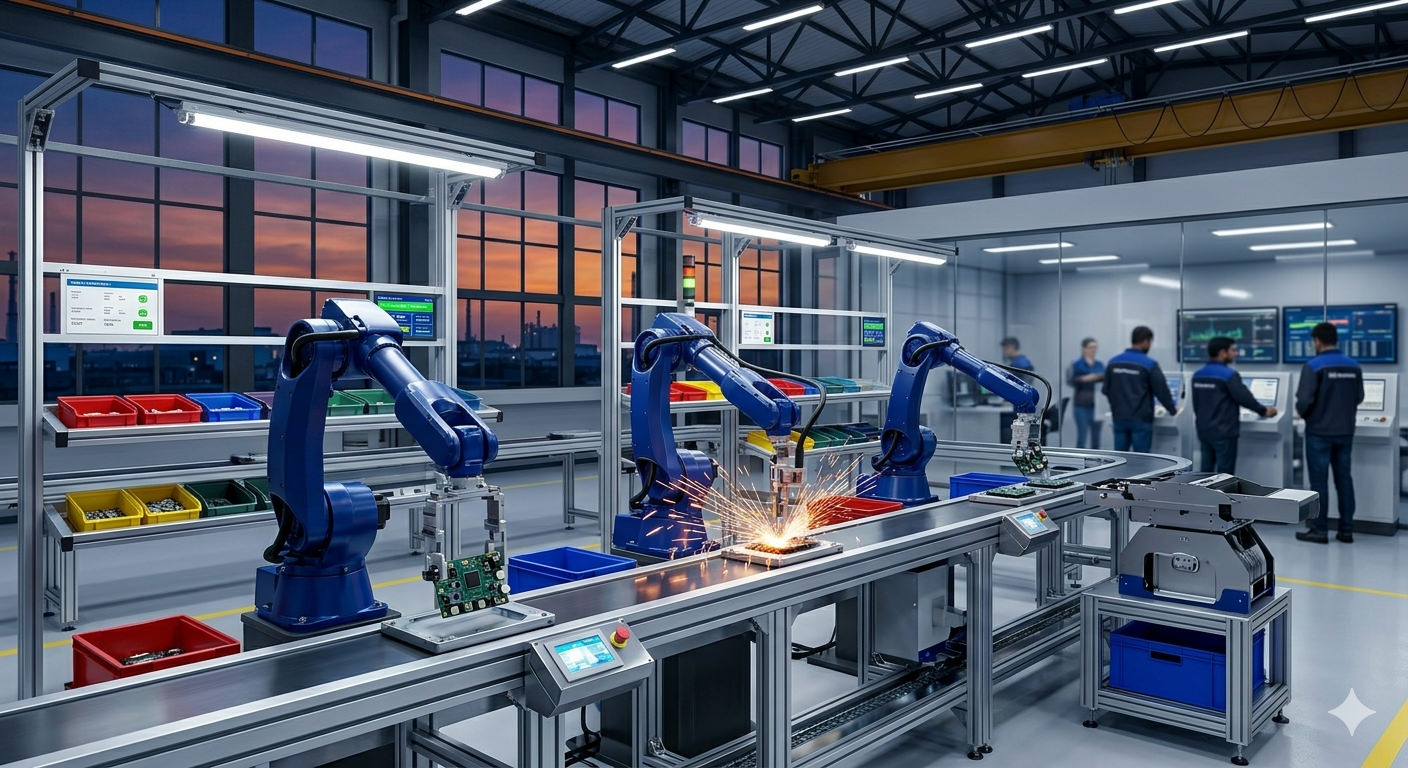
Robotics automation is no longer a concept of the future—it's a reality that's transforming industries today. From manufacturing to healthcare, autonomous systems are reshaping how we work and live.
Manufacturing Revolution
In manufacturing, robots are handling complex assembly tasks with precision and consistency that humans find difficult to match. Advanced robotic systems can work 24/7 without fatigue, significantly increasing production capacity while maintaining quality standards. Collaborative robots, or cobots, work alongside human workers, combining the precision of machines with human creativity and problem-solving.
Logistics and Warehousing
Automated systems are streamlining logistics operations, from sorting packages to managing inventory, significantly improving efficiency. Autonomous mobile robots navigate warehouses, retrieving and delivering items with unprecedented speed and accuracy. This automation reduces errors, cuts costs, and enables faster order fulfillment.
Agriculture Automation
In agriculture, robots are taking on tasks from planting seeds to harvesting crops. Autonomous tractors equipped with AI navigate fields with precision, while robotic harvesters can work continuously, addressing seasonal labor challenges.
The Future of Work
As robotics automation advances, it's creating new opportunities while reshaping traditional job roles. The key is adaptation and continuous learning. Rather than replacing workers, robots are augmenting human capabilities, allowing people to focus on higher-value tasks that require creativity, judgment, and emotional intelligence.
The integration of AI with robotics is creating smarter, more adaptable systems that can learn and improve over time, opening up possibilities we're only beginning to imagine.