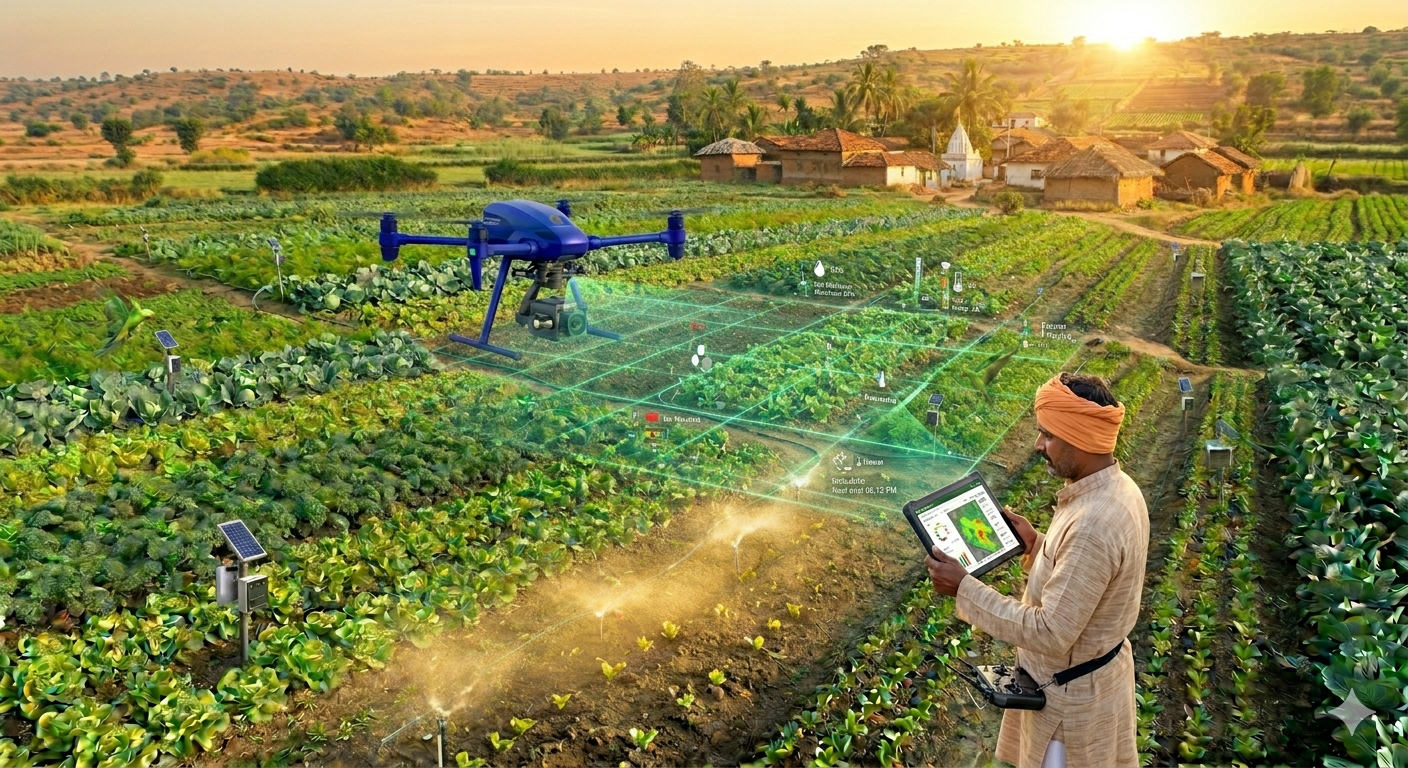
Sustainability is no longer optional in agriculture—it's essential. Technology is playing a crucial role in making farming more sustainable while maintaining or increasing productivity.
Precision Application of Inputs
AI and IoT technologies enable precise application of water, fertilizers, and pesticides. By applying these inputs only where and when needed, farmers can significantly reduce their environmental footprint while maintaining crop yields.
Soil Health Monitoring
Continuous monitoring of soil health through sensors and AI analysis helps farmers maintain soil fertility without over-application of synthetic inputs. This approach promotes long-term soil health and reduces dependence on chemical fertilizers.
Water Conservation
Smart irrigation systems use AI to optimize water usage based on real-time soil moisture data, weather forecasts, and crop water requirements. These systems can reduce water consumption by 20-30% while maintaining crop health.
Carbon Footprint Reduction
Optimized farming practices enabled by technology reduce greenhouse gas emissions. Precision farming reduces fuel consumption by minimizing unnecessary field passes, while optimized fertilizer application reduces nitrous oxide emissions.
Biodiversity Support
Technology helps farmers create more diverse agricultural landscapes. By identifying optimal areas for conservation and integrating precision farming techniques, farmers can support biodiversity while maintaining productivity.
The integration of technology and sustainable practices is creating a new paradigm in agriculture—one where productivity and environmental stewardship go hand in hand. This is not just good for the planet; it's also good business.